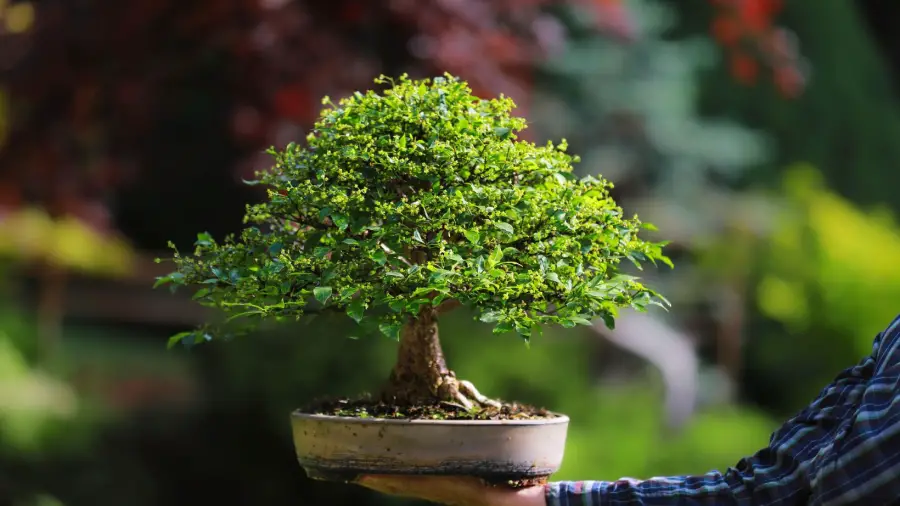
Bonsai styles range from formal upright to cascading creations, offering a wide array of options. These styles, rooted in ancient Japanese traditions, showcase the beauty and artistry of miniature trees.
The formal upright style represents strength and balance, with a straight trunk that tapers towards the top. Informal upright bonsai displays a more natural and asymmetric form, reflecting the asymmetry found in nature. Slanting bonsai features a trunk that leans to one side, conveying a sense of movement and resilience.
Cascading bonsai, often found in waterfall or cliff settings, drapes gracefully over the edge of the container. Each style requires careful pruning and shaping techniques to achieve the desired effect, resulting in truly stunning and captivating creations. Whether you prefer a more traditional or unique bonsai style, the possibilities are endless in this ancient art form.

Table of Contents
Understanding The Basics Of Bonsai Styles
Discover the diverse world of bonsai styles, ranging from the classic formal upright to the enchanting cascading creations. Explore the artistry and techniques behind these stunning miniature trees.
The Definition Of Bonsai Styles
When it comes to the art of bonsai, understanding the different bonsai styles is essential. Each bonsai style represents a unique design and aesthetic approach to shaping these miniature trees. Bonsai styles are not restricted to a single technique; rather, they encompass a set of principles that guide the artistic expression of the bonsai artist.
The Influence Of Traditional Japanese Bonsai Techniques
The history of bonsai is deeply rooted in traditional Japanese culture and aesthetics. Traditional Japanese bonsai techniques have had a significant influence on the development of bonsai styles as we know them today. For centuries, Japanese bonsai masters have honed their skills and refined various techniques to create harmonious and balanced bonsai trees. These techniques, such as “jinning” (the art of creating deadwood features) and “shari” (the intentional removal of bark to depict the aging process), have become integral parts of certain bonsai styles.
The Importance Of Understanding Bonsai Styles
Understanding bonsai styles is crucial for both bonsai enthusiasts and aspiring bonsai artists. By familiarizing yourself with the different bonsai styles, you gain a deeper appreciation for the history, culture, and artistry behind this ancient practice. Moreover, understanding bonsai styles allows you to make informed choices when selecting and styling your own bonsai trees. Each bonsai style carries its unique symbolism and visual impact, which can greatly enhance the overall aesthetic appeal of your bonsai collection.
By exploring the various bonsai styles such as formal upright, informal upright, slanting, and cascading, you can cultivate a greater understanding of the principles of balance, proportion, and harmony in bonsai design. This knowledge enables you to make more deliberate decisions when pruning, wiring, and styling your bonsai, ultimately resulting in the creation of visually stunning and artistically captivating bonsai trees.
Whether you are a beginner or an experienced bonsai enthusiast, delving into the world of bonsai styles is a rewarding and enlightening journey. It allows you to connect with the rich history and cultural significance of this ancient art form while fostering your own creativity and expression. So, let’s dive into the mesmerizing realm of bonsai styles and unlock the hidden potential of these miniature masterpieces.
Formal Upright: A Portrait Of Grace And Elegance
Discover the graceful and elegant beauty of the Formal Upright bonsai style. Perfectly captured in its upright position, this style exudes a sense of dignity and poise, making it a must-have addition to any bonsai enthusiast’s collection.
When it comes to bonsai styles, the formal upright stands out as a captivating representation of grace and elegance. This style embodies the beauty of a perfectly balanced tree standing tall and proud. With its straight trunk and meticulously placed branches, the formal upright bonsai exudes a feeling of strength and tranquility. If you are captivated by the allure of this style and wish to create your own masterpiece, read on to discover the characteristics and features of formal upright bonsai, a step-by-step guide to creating this style, and some popular tree species that lend themselves well to the formal upright design. Immerse yourself in the art of bonsai and embrace the essence of grace and elegance with the formal upright style.
Characteristics And Features Of Formal Upright Bonsai
The formal upright bonsai style is characterized by a straight trunk that gradually tapers towards the top. The branches are arranged in a regular pattern, with the lowest branch being the thickest and each subsequent branch becoming progressively smaller. The overall shape of the tree should resemble that of a mature tree found in nature, creating a sense of balance and harmony. Additionally, the foliage should be evenly distributed along the branches, providing a lush and full appearance. To further enhance the sense of grace and elegance, the branches are often slightly turned upwards at the tips, giving the tree a uplifting and upward movement.
Step-by-step Guide To Creating A Formal Upright Style
- Select a suitable tree species: Choose a tree species that is known for its straight and upright growth habit. Common choices for formal upright bonsai include junipers, pines, and maples.
- Begin with a young sapling or nursery-grown tree: Starting with a young tree allows you to shape its growth and train it into the desired form more easily. Look for a seedling or nursery-grown tree with a straight and tall trunk.
- Trunk manipulation: Gently wire the trunk in a straight manner, making sure not to damage the bark. Use bonsai wire to guide the trunk’s growth and create the desired shape. Allow the tree to grow for several seasons, periodically adjusting the wire as needed.
- Branch development: As the trunk grows, carefully prune the branches, removing any unwanted growth and encouraging the development of a regular pattern. Keep in mind the rule of decreasing branch thickness with height, ensuring each branch is slightly shorter and thinner than the one below it.
- Maintain balance and proportion: Continuously monitor the growth of your formal upright bonsai and make necessary adjustments to maintain balance and proportion. Prune excess foliage as needed to maintain an even distribution of foliage along the branches.
- Potting: Once your formal upright bonsai has reached the desired form, carefully select a suitable pot that complements its elegance. The pot should be simple and understated, allowing the focus to remain on the tree itself.
Popular Tree Species For Formal Upright Bonsai
| Tree Species | Characteristics |
|---|---|
| Juniper | Airy foliage, fine branches, and impressive needle-like leaves. |
| Pine | Distinctive long needles, rugged bark, and picturesque cones. |
| Maple | Beautifully shaped leaves that change color with the seasons. |
These tree species are popular choices for formal upright bonsai due to their natural growth patterns, the ease of shaping their trunks and branches, and their ability to provide a captivating focal point in any bonsai collection. Consider experimentation with different species to find the one that resonates with your personal preferences and artistic vision.
Now that you are equipped with the knowledge of the characteristics and features of formal upright bonsai, a step-by-step guide to creating this style, and some popular tree species to consider, it’s time to unleash your creativity and bring your own portrait of grace and elegance to life.
Informal Upright: Capturing The Essence Of Nature
The art of bonsai is a captivating journey that allows us to craft nature’s beauty in miniature form. Within the realm of bonsai, there are various styles, each with its own unique characteristics and requirements. One such style is the Informal Upright, a design that beautifully captures the essence of nature. In this article, we will explore the art of Informal Upright bonsai, including techniques for shaping and the tree varieties that are ideally suited for this style.
Embracing The Natural Beauty Of Informal Upright Bonsai
The beauty of the Informal Upright style lies in its ability to reflect the natural growth patterns of trees in nature. Unlike the more structured Formal Upright style, the Informal Upright emphasizes asymmetry and an organic aesthetic. This style seeks to evoke the feeling of a tree that has been shaped by the elements over time, showcasing its character and resilience.
When it comes to Informal Upright bonsai, the focus is on creating fluid lines and dynamic movement. The trunk may twist or curve, mimicking the graceful sway of a tree in the wind. Branches are arranged in a more random manner, alternating in length and angle. This natural irregularity creates a sense of harmony and adds depth to the overall composition.
Through the Informal Upright style, bonsai enthusiasts can capture the essence of nature’s beauty and bring it indoors. By carefully shaping and training the tree, one can create a living work of art that reflects the ever-changing and resilient spirit of nature.
Techniques For Shaping An Informal Upright Bonsai
Shaping an Informal Upright bonsai requires both artistic vision and technical skill. Here are some techniques commonly used:
- Wiring: Wiring is a common technique used to guide the branches into desired positions. Careful placement and tension of wire can create bends and curves that enhance the overall design.
- Pruning: Pruning is crucial in shaping an Informal Upright bonsai. By selectively removing branches and foliage, one can create the desired silhouette and maintain the tree’s natural aesthetic.
- Clip and Grow: This technique involves selectively trimming back the branches to stimulate new growth in desired areas. By allowing some branches to grow freely while controlling others, bonsai enthusiasts can achieve the desired shape over time.
These techniques must be applied with care and patience, as shaping an Informal Upright bonsai is an ongoing process that requires regular maintenance and adjustment.
Tree Varieties Ideal For Informal Upright Styling
Not all tree varieties are perfectly suited for the Informal Upright style. Here are some tree species that are ideal choices for this style:
| Tree Variety | Description |
|---|---|
| Japanese Maple (Acer palmatum) | A popular choice for bonsai due to its delicate foliage and ability to develop a gracefully curved trunk. |
| Juniper (Juniperus spp.) | An evergreen tree with flexible branches, making it suitable for creating the twisting and curving forms characteristic of the Informal Upright style. |
| Pine (Pinus spp.) | The gnarled and weathered appearance of pine trees lends itself well to the Informal Upright style, evoking a sense of age and strength. |
These tree varieties offer unique characteristics that complement the Informal Upright style, allowing bonsai enthusiasts to create stunning natural compositions that capture the essence of nature.
Cascade: A Dramatic Display Of Nature’s Power
Discover the exquisite artistry of bonsai styles, ranging from the elegant and upright to the captivating and cascading creations. Appreciate nature’s power as it is beautifully displayed in the intricate and dramatic cascade of these miniature masterpieces. Explore an enchanting world where creativity and nature intertwine seamlessly.
Cascading Bonsai: A Symbol Of Beauty And Resilience
A cascade bonsai is a dramatic representation of nature’s power, capturing the breathtaking beauty and resilience of trees that cling to the sides of mountains and rocky cliffs. With branches cascading downwards in a graceful display, this bonsai style evokes a sense of movement and drama that is truly captivating. It requires careful craftsmanship and meticulous maintenance to create and sustain a cascade bonsai, making it a noteworthy choice for bonsai enthusiasts looking to create a captivating centerpiece for their collection.
Crafting And Maintaining A Cascade Bonsai
Crafting a cascade bonsai involves skillfully bending and shaping the main trunk or leader so that it cascades down in an elegant manner. This can be achieved through the use of wire or bonsai technique known as “clip and grow”. Once the desired shape is achieved, maintaining the cascade bonsai requires regular pruning and trimming to encourage the tree to grow in the desired direction.
It is crucial to remove any branches or shoots that grow upwards, as they would spoil the cascading effect. Additionally, the longer branches at the base of the tree should be kept longer than those higher up to emphasize the cascading nature. This meticulous and ongoing maintenance allows the cascade bonsai to maintain its striking appearance and helps it to continue growing in the desired direction.
Types Of Trees That Excel In Cascade Styling
While many tree species can be trained into a cascade bonsai, certain varieties are better suited for this particular style. Here are some examples:
- Pines: Pine trees, such as the Scots Pine or Japanese Black Pine, are commonly used for cascade bonsai due to their elegant needle clusters and natural tendency to have branches that droop downwards.
- Junipers: Junipers, like the Shimpaku Juniper or Rocky Mountain Juniper, have flexible branches that make them ideal for creating cascading bonsai styles.
- Maples: Japanese Maple trees possess delicate leaves and branches that lend themselves well to cascade styling, providing a stunning display of nature’s artistry.
- Wisteria: Wisterias, with their long, flowing branches and beautiful cascading flowers, are perfect for creating an enchanting cascade bonsai.
These tree species excel in cascade styling due to their unique characteristics and natural growth patterns. When selecting a tree for this style, it’s essential to consider these factors to ensure the best results.
In conclusion, the cascade bonsai style offers a dynamic and captivating representation of nature’s power and resilience. Crafted with precision and maintained with care, these bonsai creations become stunning focal points in any collection. By choosing tree species that excel in cascade styling and applying the necessary techniques, bonsai enthusiasts can create their own unique and awe-inspiring display of nature’s beauty.
Semi-cascade And Literati: Reflections Of Poetic Artistry
When it comes to the art of bonsai, there is an incredible variety of styles to explore. Each style offers a unique expression of the natural world, captivating observers with its beauty and artistry. Two styles that particularly reflect the poetic essence of bonsai are the Semi-Cascade and Literati.
The Enchanting Elegance Of Semi-cascade Bonsai
Semi-Cascade bonsai, also known as Han-Kengai, is a style that evokes a sense of enchantment and elegance. In this style, the trunk of the tree curves gracefully downwards, while the branches cascade down towards the ground. This creates a visual harmony that mimics the natural growth patterns of trees along cliffs or riverbanks.
Semi-Cascade bonsai brings a sense of tranquility and peacefulness to any space it inhabits. The gentle curves and flowing branches invite us to pause and reflect, as if we were transported to a serene mountainside. It is a perfect style for those who seek a touch of nature’s beauty within the confines of their living spaces.
Embracing The Freestyle Beauty Of Literati Bonsai
Literati bonsai, also known as Bunjin, is a style that embraces the freestyle and unconventional aspects of artistry. It reflects the spirit of literati poets and painters who sought to break away from the traditional norms and create something uniquely their own.
The Literati style is characterized by a long and twisting trunk with sparse, irregularly placed branches. It embodies the essence of simplicity, harmony, and elegance in its minimalistic design. Every curve and angle tells a story, capturing the imagination and inviting contemplation.
Embracing a Literati bonsai in your collection breathes life into any space. Whether it graces a table or sits on a pedestal, its unconventional beauty will draw the viewer’s eyes, inviting them to explore the depths of its poetic expression.
Tree Selection And Design Principles For Semi-cascade And Literati
When selecting trees for the Semi-Cascade style, look for species with naturally cascading branches or flexible trunks that can be shaped into cascades. Species such as Pine, Juniper, and Maple are commonly used. The trunk should have an appealing curve, exhibiting grace and balance in its form.
Similarly, when choosing a tree for the Literati style, consider species with slender trunks that can be twisted and contorted into unique shapes. Sophora, Cedar, and Elm are often favored for their ability to accommodate the unconventional aesthetic of Literati bonsai.
Design principles play a crucial role in both these styles. For Semi-Cascade bonsai, ensure that the cascading branches flow gracefully downward, maintaining an overall sense of balance. In Literati bonsai, focus on creating a sense of movement and rhythm through the twists and turns of the trunk, allowing negative space to enhance the overall composition.
By understanding the unique characteristics and design principles of Semi-Cascade and Literati bonsai, you can embark on a poetic journey of artistic expression. These styles offer endless possibilities for creating captivating bonsai that reflect the beauty and harmony of nature.
Cascading Creations: The Artistry Behind Bonsai Styling
As an art form that combines nature and craftsmanship, bonsai styling offers a range of styles to suit different preferences and aesthetics. One captivating style that stands out for its unique charm is the cascading bonsai. Cascading creations, also known as kengai bonsai, bring a sense of drama and movement to these miniature trees. In this article, we will explore the artistry behind bonsai styling, with a focus on cascading creations.
Combining Techniques For Unique Cascading Bonsai Designs
Cascading bonsai designs require careful planning and a combination of specific techniques to achieve their captivating appearance. Here are some key techniques that are often used in creating unique cascading bonsai designs:
- Wire Training: To achieve the cascading effect, wire training is essential. By carefully wrapping and positioning wires around the branches and trunk, bonsai enthusiasts can guide the growth in desired directions. This technique allows for the creation of graceful curves and bends, giving the bonsai its cascading appearance.
- Pruning and Branch Selection: Strategic pruning and branch selection play a crucial role in shaping cascading bonsai. By removing unwanted branches and foliage, bonsai artists can enhance the overall silhouette and balance of the tree. This technique helps maintain proportion and flow in the cascading design.
- Pot Selection: The choice of pot is another important aspect of creating cascading bonsai. Typically, cascading bonsai trees are placed in pots with a deeper and narrower shape, allowing the cascading branches to elegantly spill over the edge. The pot should complement the overall aesthetics and enhance the visual impact of the cascading design.
Applying Advanced Bonsai Styling Techniques
While the techniques mentioned above form the foundation of cascading bonsai styling, advanced bonsai artists often incorporate additional techniques to elevate their creations further. Here are a few advanced techniques that can be applied to achieve remarkable cascading bonsai designs:
- Air Layering: Air layering is a technique used to encourage the formation of additional roots on a chosen branch or section of the tree. By carefully removing a ring of bark and then encouraging new root growth, bonsai artists can create an illusion of multiple trunks cascading down.
- Deadwood Carving: Deadwood carving is a technique that involves sculpting and shaping the dead or aging wood sections of a bonsai tree. This technique not only adds character and uniqueness to the bonsai but can also enhance the overall cascading effect by creating intricate hollows, cracks, and texture.
- Accent Plants and Rock Arrangement: To complement the cascading bonsai tree, advanced bonsai artists often incorporate accent plants and rock arrangements in their designs. These additional elements further enhance the natural beauty and aesthetic appeal by adding depth, contrast, and harmony.
Showcasing Artists And Their Inspiring Cascading Bonsai Creations
Many talented bonsai artists have dedicated their skills and creativity to the art of cascading bonsai. Here are a few notable artists whose inspiring creations showcase the true artistry and beauty behind cascading bonsai styling:
| Artist Name | Specialty |
|---|---|
| Takashi Nakamura | Cascading Bonsai with Exquisite Trunk Movement |
| Yuji Yoshimura | Innovative Approach to Cascading Bonsai Design |
| Kunio Kobayashi | Creating Harmonious Cascades with Rock Arrangements |
Through their masterful creations, these artists continue to inspire bonsai enthusiasts around the world to explore the boundless possibilities of cascading bonsai styling.
Frequently Asked Questions For “bonsai Styles: From Formal Upright To Cascading Creations”
What Are The Different Bonsai Styles?
Bonsai trees can be shaped into various styles, such as the formal upright, informal upright, slanting, cascade, semi-cascade, and windswept. Each style captures a unique aesthetic and tells a story through the tree’s form and direction. These styles provide a richness and diversity to the world of bonsai.
How Do I Create A Formal Upright Bonsai?
To create a formal upright bonsai, start with a straight young tree and prune branches, maintaining a conical shape. Gradually wire the branches upwards, vertically aligning them with the trunk. Regular trimming and maintenance will help refine the form and achieve the desired formal upright style.
What Is A Cascade Bonsai?
Cascade bonsai, also known as kengai, is a style where the trunk of the tree cascades downwards below the pot’s rim. It gives the impression of a tree growing on a cliff or a slope. This style can be achieved by carefully manipulating the trunk’s growth and using a pot with a raised lip to accentuate the effect.
Conclusion
Bonsai enthusiasts have a rich array of styles to choose from, each offering its own unique charm and artistic expression. Whether you prefer the structured elegance of the formal upright, the dynamic energy of the informal upright, or the graceful cascade of the cascading style, there is a bonsai style to suit every taste.
By understanding the characteristics and techniques associated with each style, you can create breathtaking bonsai creations that showcase your individuality and passion for this ancient art form.